_______________________________
Today's Daily Dose of Hope is sponsored by Morning Brew, the free daily newsletter that covers business news, from Wall Street to Silicon Valley, with a little wit...and in about five minutes. Hope and good humor go together, and Morning Brew gives you a smart, lighter start to your day. Sign up below.
_______________________________
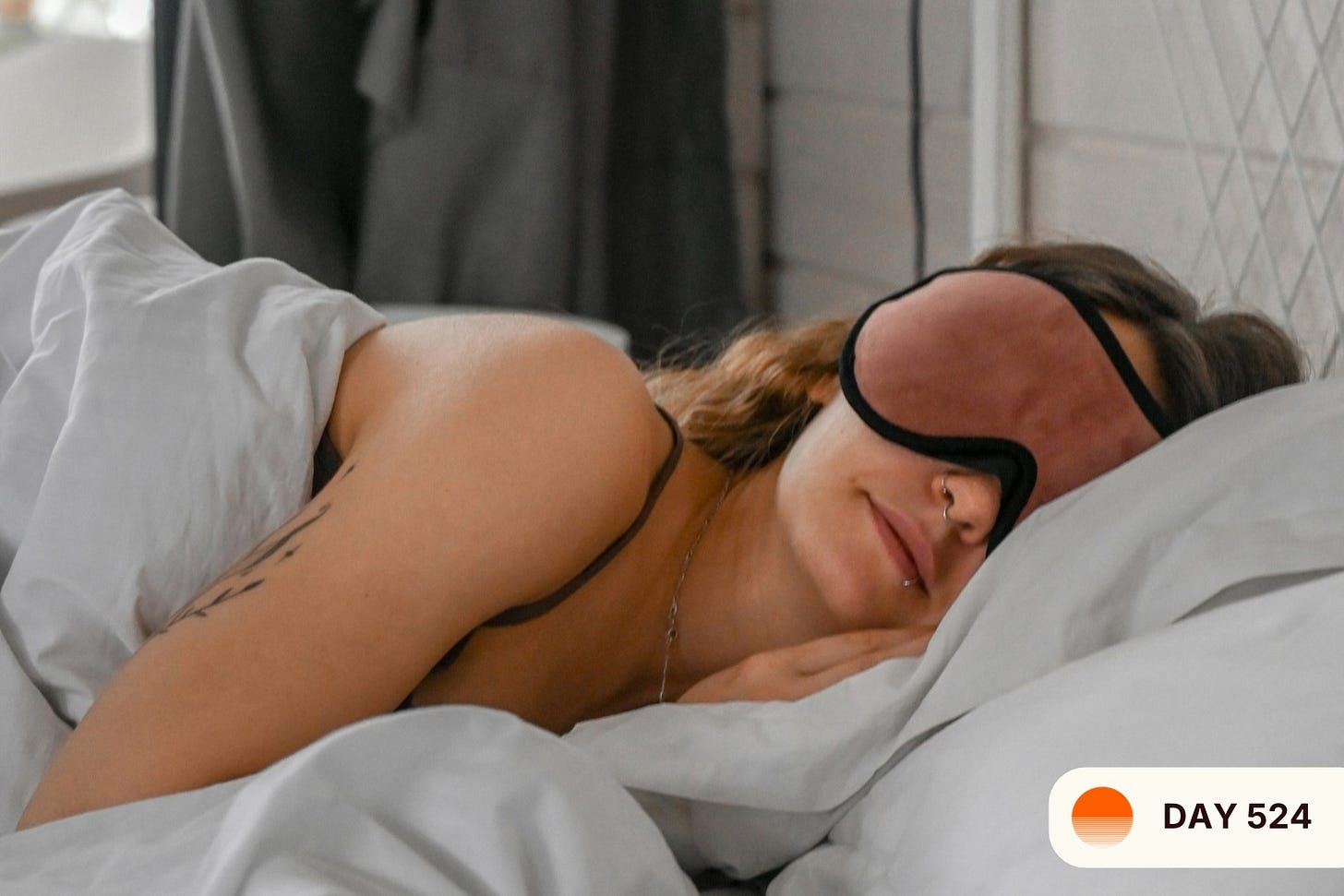
Recently, I went to my sleep doctor to figure out why I wasn’t sleeping well. It reminded me that on December 29, 2025 on Substack I wrote a post asking the question, “Can sleep drive hope?” The conclusion was a resounding, “yes” that sleep can actually give you more hope. This post is a variant of this previous post.
Sleep helps you feel hopeful primarily by resetting the emotional and cognitive systems of the brain, which changes how you perceive and react to stress.
When you are sleep-deprived, the communication between the amygdala (the brain’s emotional center) and the prefrontal cortex (the part responsible for logic and regulation) is weakened. This makes the amygdala overreactive, causing you to perceive neutral events as negative and stressors as insurmountable. By restoring this connection, sleep allows you to regain a sense of perspective, turning a “catastrophe” back into a “problem that can be solved.”
Cognitively, sleep—specifically REM sleep—acts as a form of overnight emotional therapy. It processes difficult memories and strips away the intense emotional sting from the day’s events. When you wake up, the emotional weight of a problem is often lighter, making you feel more capable of handling it. This shift from feeling overwhelmed to feeling capable is the foundation of hope.
Physically, sleep regulates cortisol (the stress hormone) and dopamine (the reward hormone). A rested brain is more sensitive to positive cues and better able to anticipate positive outcomes. While sleep doesn’t change your external circumstances, it changes your internal chemistry so that you have the mental resilience and optimism required to believe a better outcome is possible.
Here are some suggestions that I got from my sleep doctor to give you better sleep:
Before bed
- Keep a steady wake-up time every day; give yourself enough time for sleep. Most adults need at least 7 hours.
- Spend the last 30–60 minutes winding down: dim the lights, put away stimulating screens or work and try reading, gentle stretching, or slow breathing.
- Keep the room dark, quiet, cool, and comfortable.
- Avoid caffeine later in the day and avoid alcohol near bedtime; it can make sleep more broken. Try not to have a heavy meal or lots of fluids right before bed.
- If worries keep looping, jot them down with a note about when you’ll deal with them tomorrow.
If you wake during the night
- Keep lights low and avoid checking the time or your phone; clock-watching can make it harder to relax.
- Try slow, easy breathing or a body scan, without pressuring yourself to fall asleep immediately.
- If you’re still wide awake after roughly 20 minutes, get out of bed and do something quiet in dim light, such as reading. Return when you feel sleepy. This helps keep the bed associated with sleep rather than frustration1.
-
Attributions
1Mayo Clinic
Hope doesn’t always look like effort. Sometimes it looks like lying still and letting the day be finished.
Question
What is one small thing you could let go of tonight, a worry, a to-do list, or a conversation you keep replaying, so that your sleep can do its quiet work of healing?
Daily Dose of Hope Mug
$24.00
Start your day with a sip of Hope. Every mug supports Bernard’s mission to find and share the stories that prove hope is alive and well. Keep one for yourself, or give it to someone who needs the reminder.
Buy now
A Daily Dose of Hope — one short reflection each day about where hope lives in our world. Read in 50 states in the US and 159 countries of the 195 countries throughout the World.
Members of our community in 81.5% of the countries in the World!