________________________
Today’s Daily Dose of Hope is brought to you by Shortform.
I read a lot. Hope takes some feeding, and good books are a big part of how I keep mine going. But I’m also busy, and I know you are too. That’s why I like Shortform. They’ve built a library of more than 12,000 book guides, with real analysis and commentary, not just a skim of the plot. You can read them when you have a quiet minute or listen on the go, and the exercises help the ideas stick.
If you’ve got a stack of books you keep meaning to get to, this is a good way to start. Check out Shortform at shortform.com.
________________________
Without getting political, many members of our hopeful community believe there is a gap in hope in the world today. I, too, wanted to understand why if that is truly the case. So, as I am wont to do, I researched the topic. And here is what I learned.
My take: perhaps we are not simply running out of hope. Perhaps we are overwhelmed by what is wrong, disconnected from one another, and underestimating how much goodness still exists.
The research does not establish one universal “hope gap.” It does, however, reveal patterns in well-being, connection, and trust that help explain why hope can feel harder to find.
We are taking in more distress than we feel equipped to carry
There is a difference between being informed and feeling inundated. The Reuters Institute’s 2025 Digital News Report found that 40% of respondents across surveyed markets sometimes or often avoided the news, up from 29% in 2017. Its research identifies people who selectively avoid coverage because they struggle with news overload or want to protect themselves from upsetting topics1.[reutersinstitute.politics.ox.ac]
My thinking is that when we repeatedly encounter problems much larger than our ability to address them, concern can begin to feel like helplessness. We do not have to stop caring. But caring need not require making ourselves available to every distressing update.
We are missing some of the ordinary moments that help us feel less alone
Hope is not only about what we believe will happen tomorrow. It is also about whether we feel accompanied today.
The World Happiness Report 2025 found that sharing meals with others is strongly associated with greater life satisfaction, more positive feelings, and less loneliness. Its authors also acknowledge that important questions about cause and effect remain: these findings do not prove that sharing a meal, by itself, produces happiness2.
Still, I find the message compelling. A conversation, an invitation, a place at someone’s table: these may seem small beside the world’s problems. Yet they can be meaningful reminders that we do not have to face those problems alone.
We may be underestimating the kindness around us
One of the most encouraging findings comes from the World Happiness Report 2025: people underestimate the likelihood that a lost wallet will be returned. The report also finds that expecting kindness from others is strongly associated with higher life satisfaction2.
That does not mean every stranger is trustworthy or every situation is safe. It does suggest that our expectations can be darker than the reality around us.
When we stop expecting goodness, we risk overlooking it. Hope does not ask us to ignore cruelty. It asks us not to let cruelty become our entire understanding of humanity.
Perhaps closing the hope gap begins with shortening the distance between us.
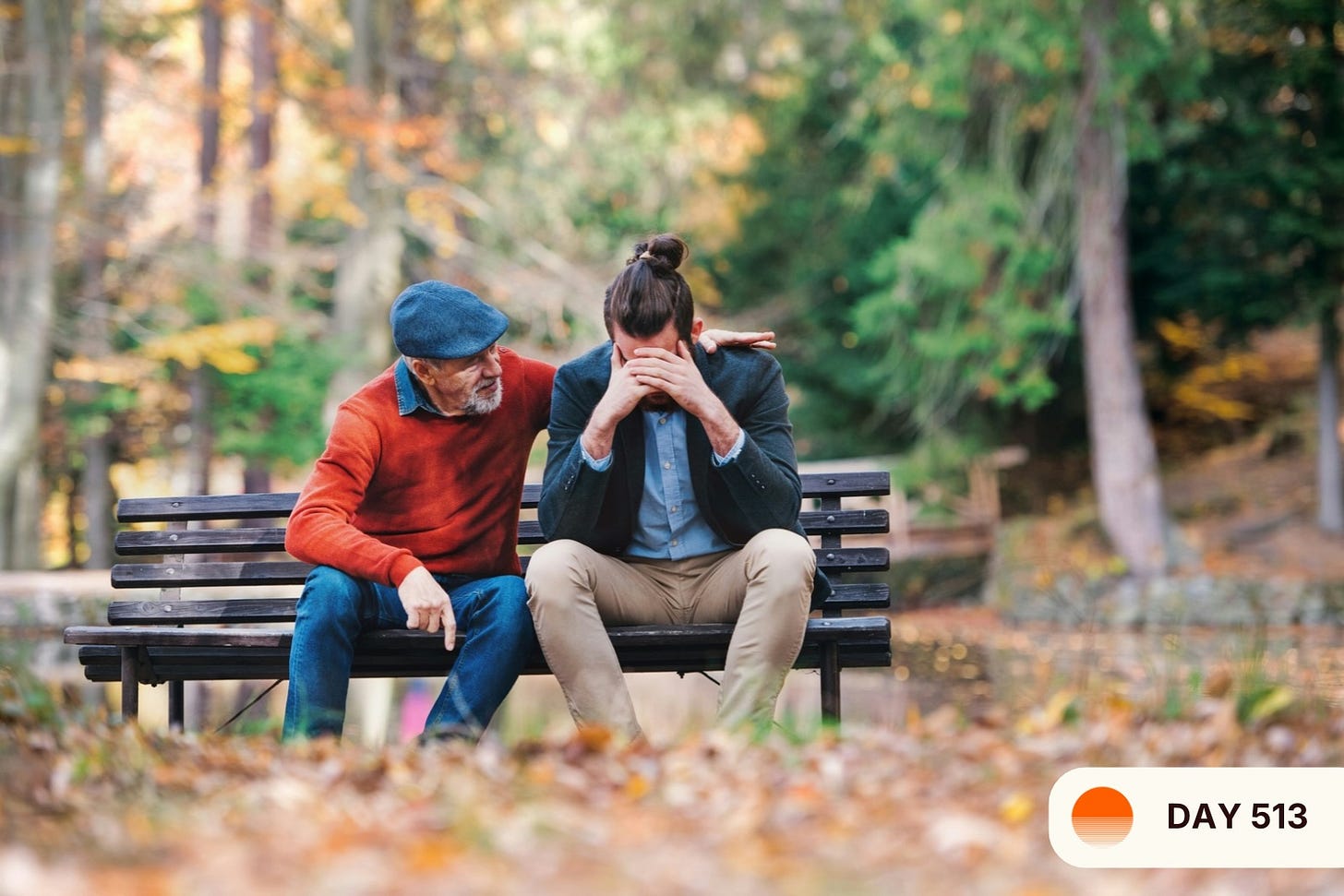
We do not have to promise someone that everything will be all right. We can listen. We can show up. We can make one difficult day less lonely.
Hope is not always a prediction about the future. Sometimes, it is something we offer one another in the present.
Question
What is one small act of kindness you have witnessed recently that reminded you there is still reason to hope?
ATTRIBUTIONS
1Overview and key findings of the 2025 Digital News Report
2Sharing meals with others: How sharing meals supports happiness and social connection
A Daily Dose of Hope — one short reflection each day about where hope lives in our world. Read in 50 states in the US and 157 countries of the 195 countries throughout the World.
Members of our community in 80% of the countries in the World!